Skip to content
Ekşi Höyük.
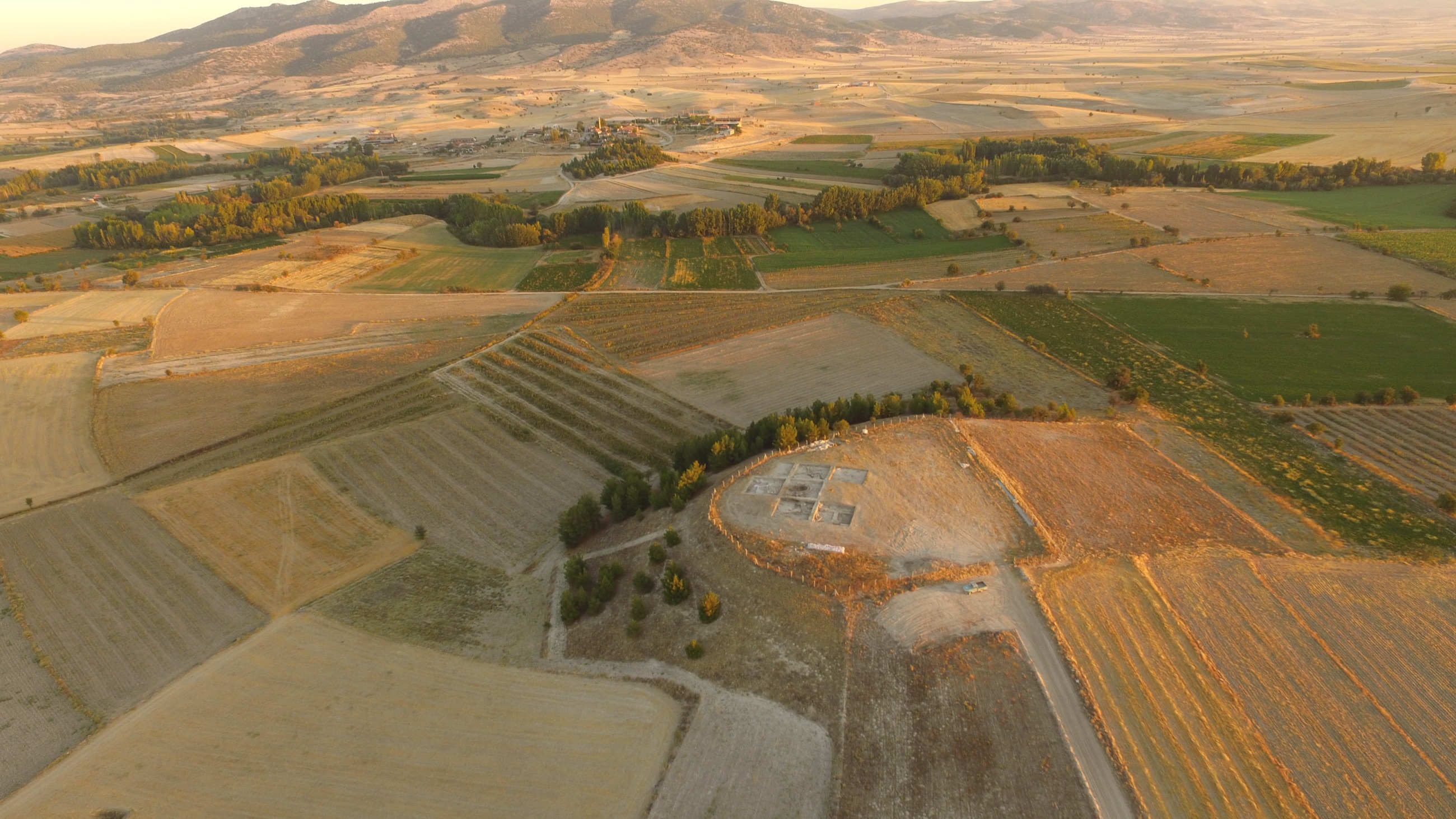
Aerial view of Ekşi Höyük at golden hour: a low mound surrounded by fields, with the Baklan Plain and mountains beyond.

Denizli – Çal – Dayılar

Ekşi Höyük

A Neolithic Mound in the Upper Meander Basin

Excavation Director: Prof. Dr. Fulya DEDEOĞLU

A settlement, some 8,000 years of history

01

About the Mound

In Dayılar, in the Çal district of Denizli, at the start of the natural route linking the Çivril–Baklan plains, watered by the Büyük Menderes (Great Meander), to the Çal Plateau, rises a natural hill formed in the Neogene. What turned Ekşi Höyük into an archaeological settlement is the human life that accumulated on this natural rise over thousands of years.

Villages founded by Neolithic communities were renewed one upon another on the hill; buildings, open areas, places of production and the traces of daily activities gradually formed the archaeological fabric of the mound. Ekşi Höyük is an important settlement for understanding the prehistory of the Upper Meander Basin, and in particular the region’s Neolithisation. Systematic surveys across the plains and uplands of the basin revealed numerous settlements dated to the Neolithic and Chalcolithic periods; among them, excavations began in 2015 at Ekşi Höyük, which stands out for its state of preservation and research potential.

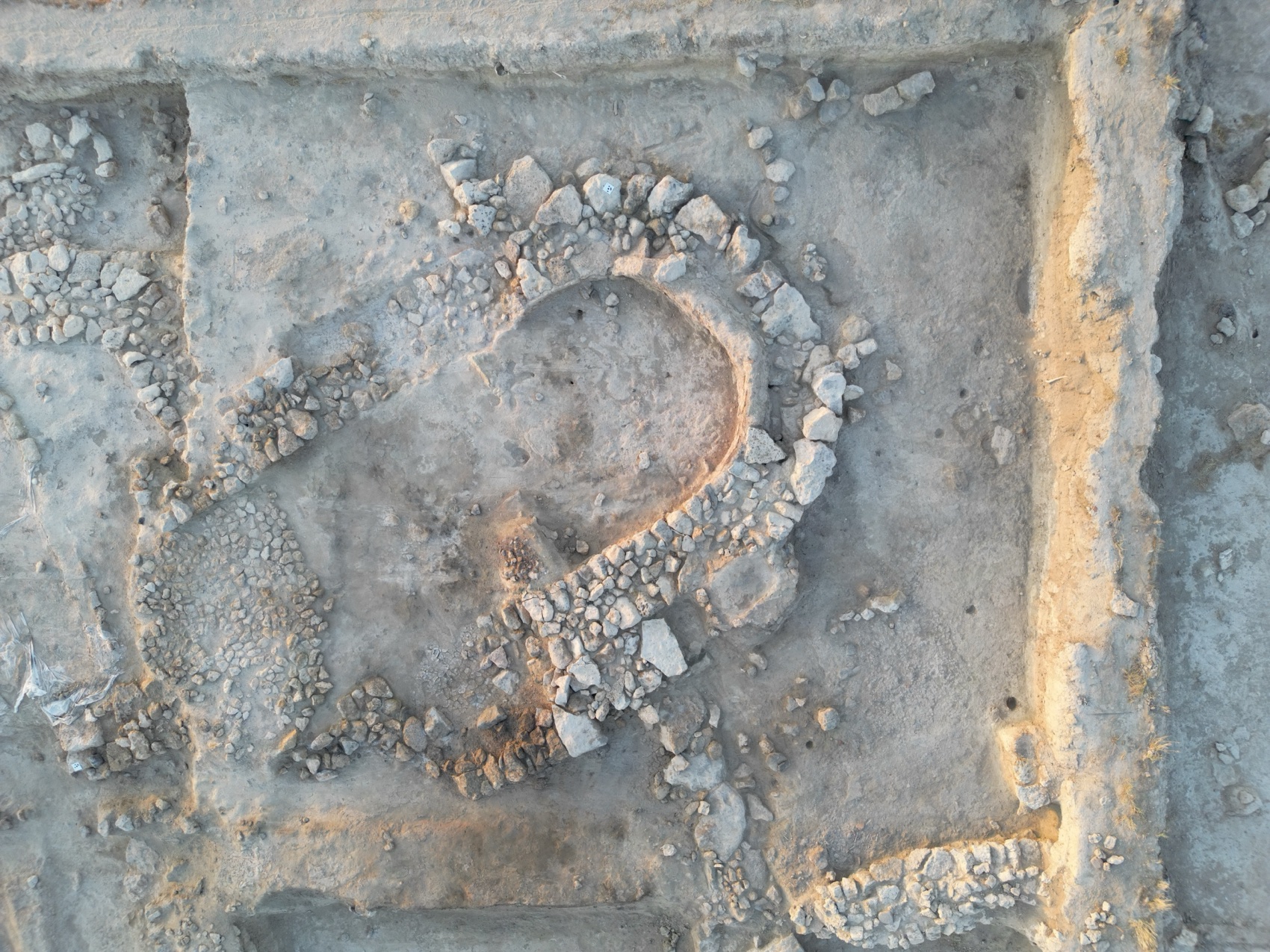
The excavations show that the settlement’s history reaches back to the first half of the 7th millennium BC. The earliest phases are marked by rectangular buildings with red lime-plastered floors, while later periods saw a different settlement layout in which apsidal and rectangular buildings, open areas, hearths, ovens and storage units were used together. After the Neolithic occupation the hill was also used in later prehistoric periods, and after a long interval it became a cemetery in the 10th–11th centuries AD.

The architecture and finds uncovered at Ekşi Höyük allow us to understand not only where and when the communities living here lived, but also how they lived. Traces of weaving, clay and bone working, chipped-stone production, cereal processing and storage — considered together with a way of life based on farming and herding — reveal a village order in which production and daily life were intertwined. The buildings and the open areas around them show how different activities were organised within the settlement and how the community reshaped its space over time.

The aim of the Ekşi Höyük Excavation Project is therefore not only to bring buildings and finds to light. The research seeks a holistic understanding of the development of settled life in the Upper Meander Basin: the relationships of village communities with their environment, their subsistence strategies, modes of production and spatial organisation. The excavations are carried out with contributions from fields such as geoarchaeology, archaeobotany, archaeozoology, bioarchaeology and archaeometry. The Ekşi Höyük Excavation is conducted with the permission of the Ministry of Culture and Tourism of the Republic of Türkiye, on behalf of Ege University, under the direction of Prof. Dr. Fulya Dedeoğlu Konakçı.
02

Settlement Chronology

  1. c. 6750 – 6600 BC

    Foundation: the first village

    The settlement's earliest phase is defined by red lime-plastered rectangular buildings. The first farming community of the Baklan Plain establishes the core of the mound.

  2. 6400 – 6000 BC

    The apsidal-building era

    Horseshoe-plan (apsidal) houses rise, some with ovens inside. The first phase of one apsidal house ended in fire and was carefully sealed — the rhythm of life pressed into the layers.

  3. until c. 5500 BC

    From Late Neolithic to Chalcolithic

    Although modern agriculture has eroded the upper layers, the evidence indicates that occupation continued, intermittently, into the Chalcolithic Age.

  4. 10th – 11th century AD

    The hill becomes a cemetery

    Thousands of years later, the abandoned mound is reused in the medieval period as a burial ground.

  5. 2015 – today

    Excavation begins

    Following the surveys, the Ekşi Höyük Archaeological Excavation Project (EKAP) begins. Seven building levels have been documented over eleven seasons; work continues.

Overhead view: the stone walls of a horseshoe-plan apsidal building stand out in the raking light of sunset.
Apsidal building in sunset light6400–6000 BC phase · excavation archive
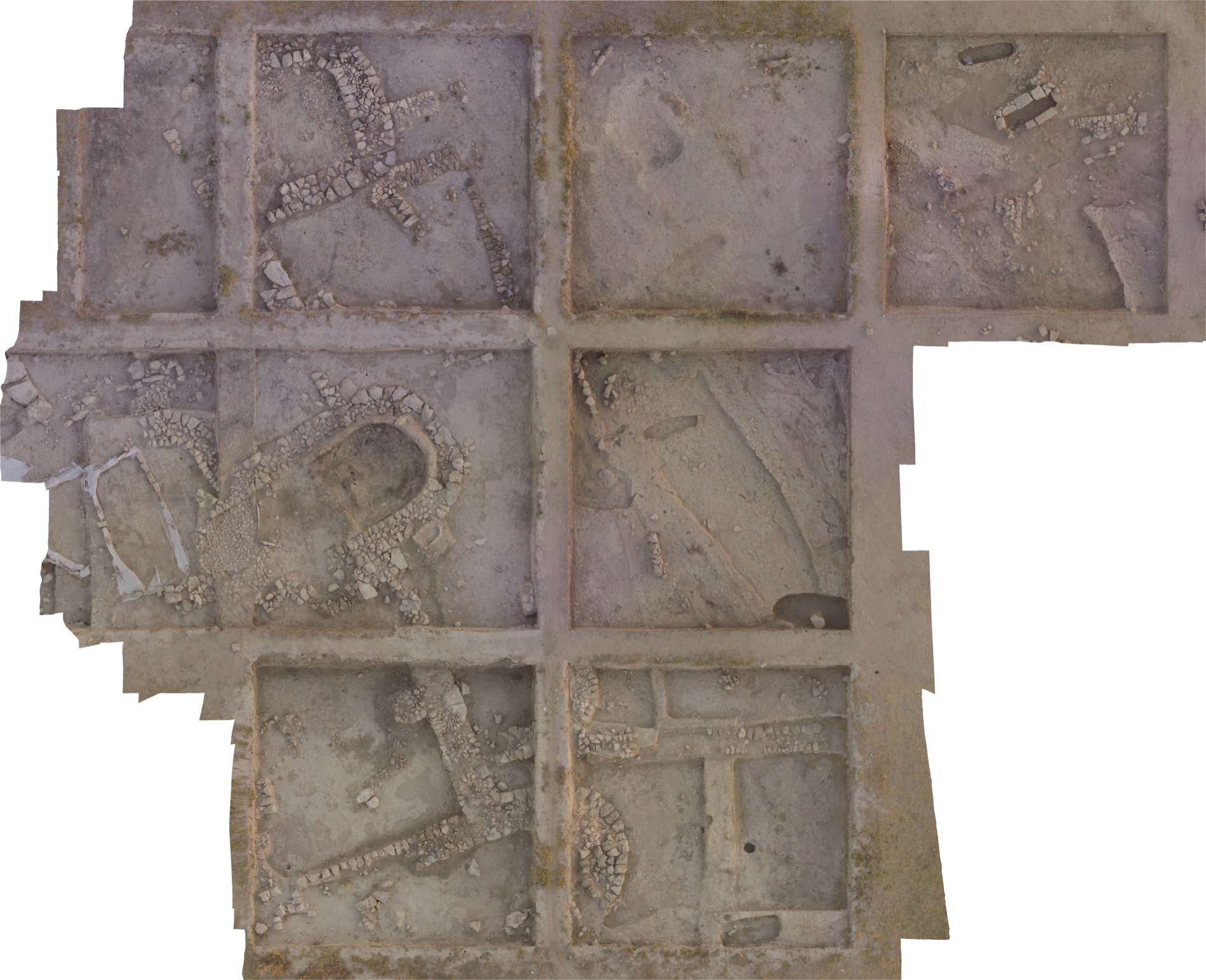
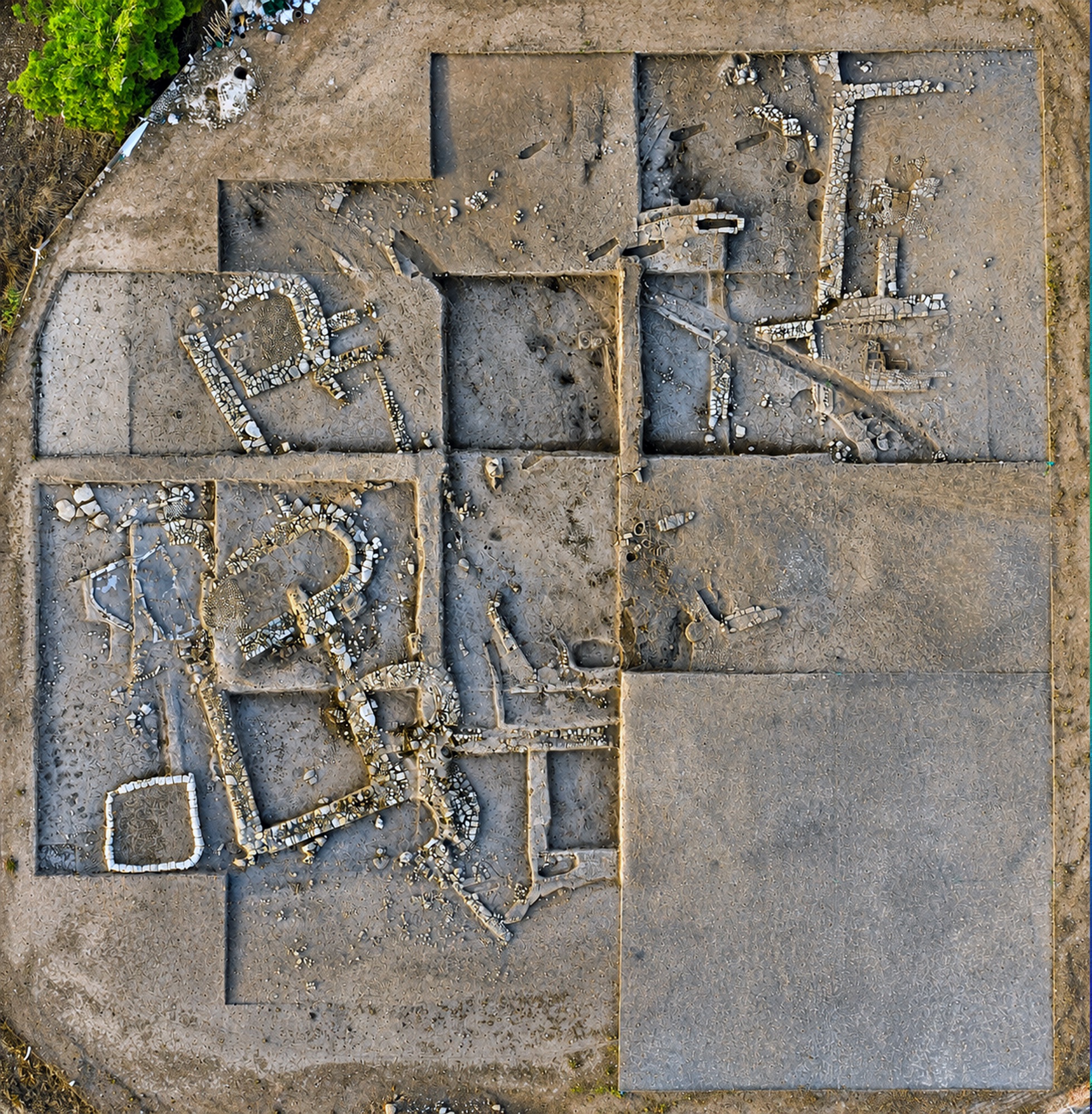
Overhead natural-colour orthophoto of the excavation area: trenches divided into grid squares, stone walls, and the apsidal building at centre.
Overhead plan of the excavationOrthophoto · drone photogrammetry · 2021

The Archaeology of the Millimetre

Each season, the mound is mapped millimetre by millimetre.

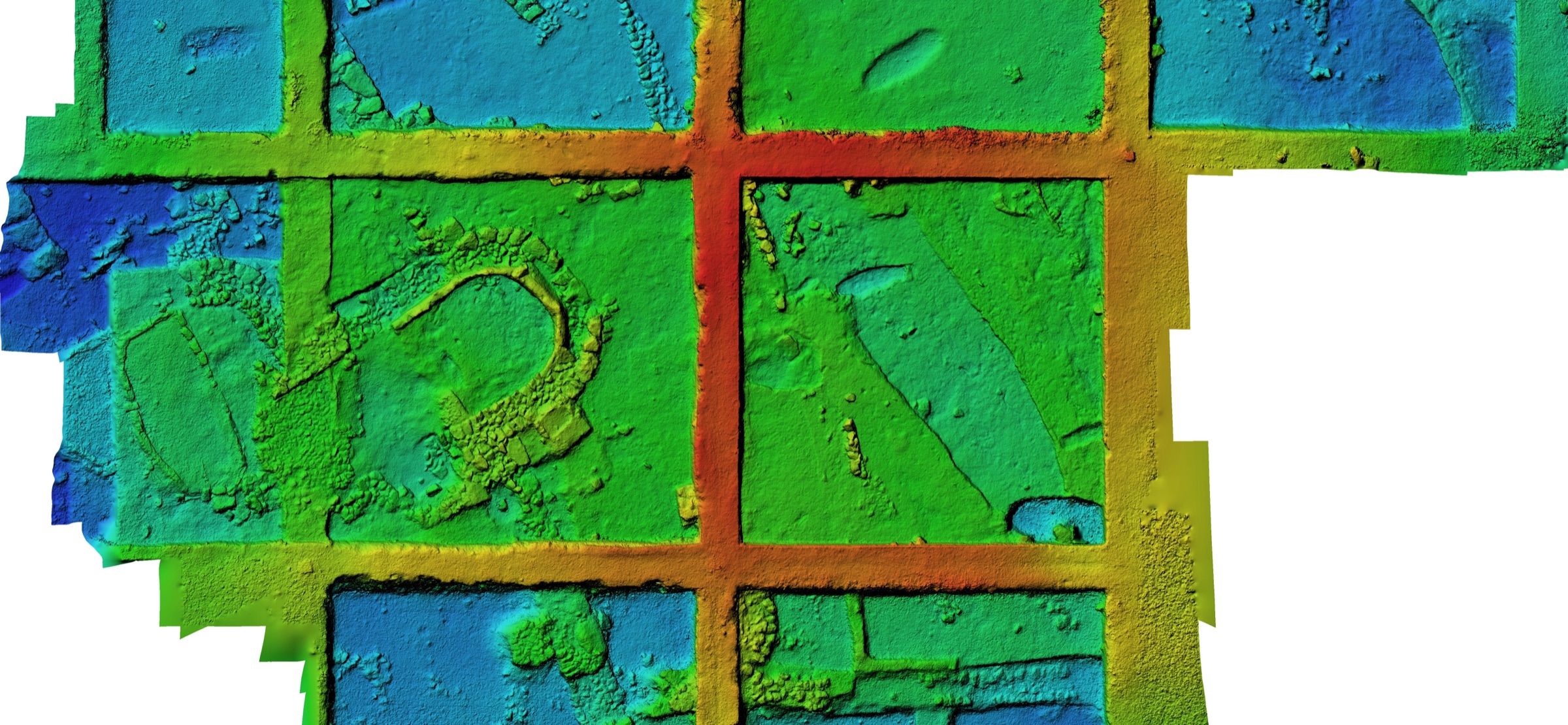
Every season, hundreds of drone frames are combined through photogrammetry into a centimetre-resolution digital elevation model of the mound. In the model below, colour encodes height — red is high, blue is low; the baulks and the hollow of the apsidal building can be read at a glance. As the soil is lifted — irreversibly changing the past — the memory of the dig is preserved in these records.

Colour digital elevation model of the Ekşi Höyük trenches: baulks as a red grid, the hollow of the apsidal building and floors in blue-green tones.
Digital Elevation Model (DEM)Colour = height · drone photogrammetry · 2021
03

Finds

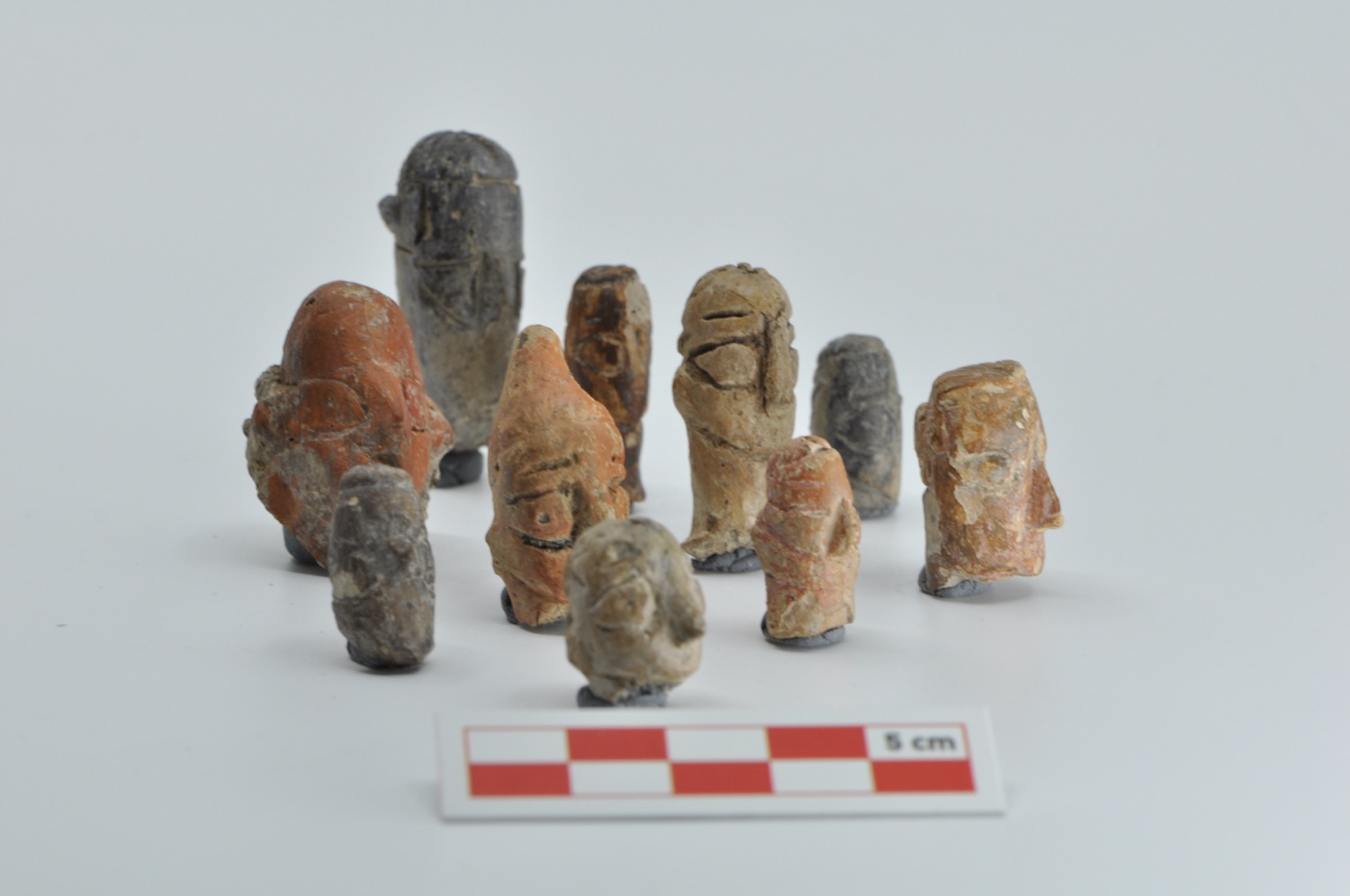
About ten small clay figurines together against a grey background, with a 5-centimetre scale in front.
A group of clay figurinesFired clay · excavation archive
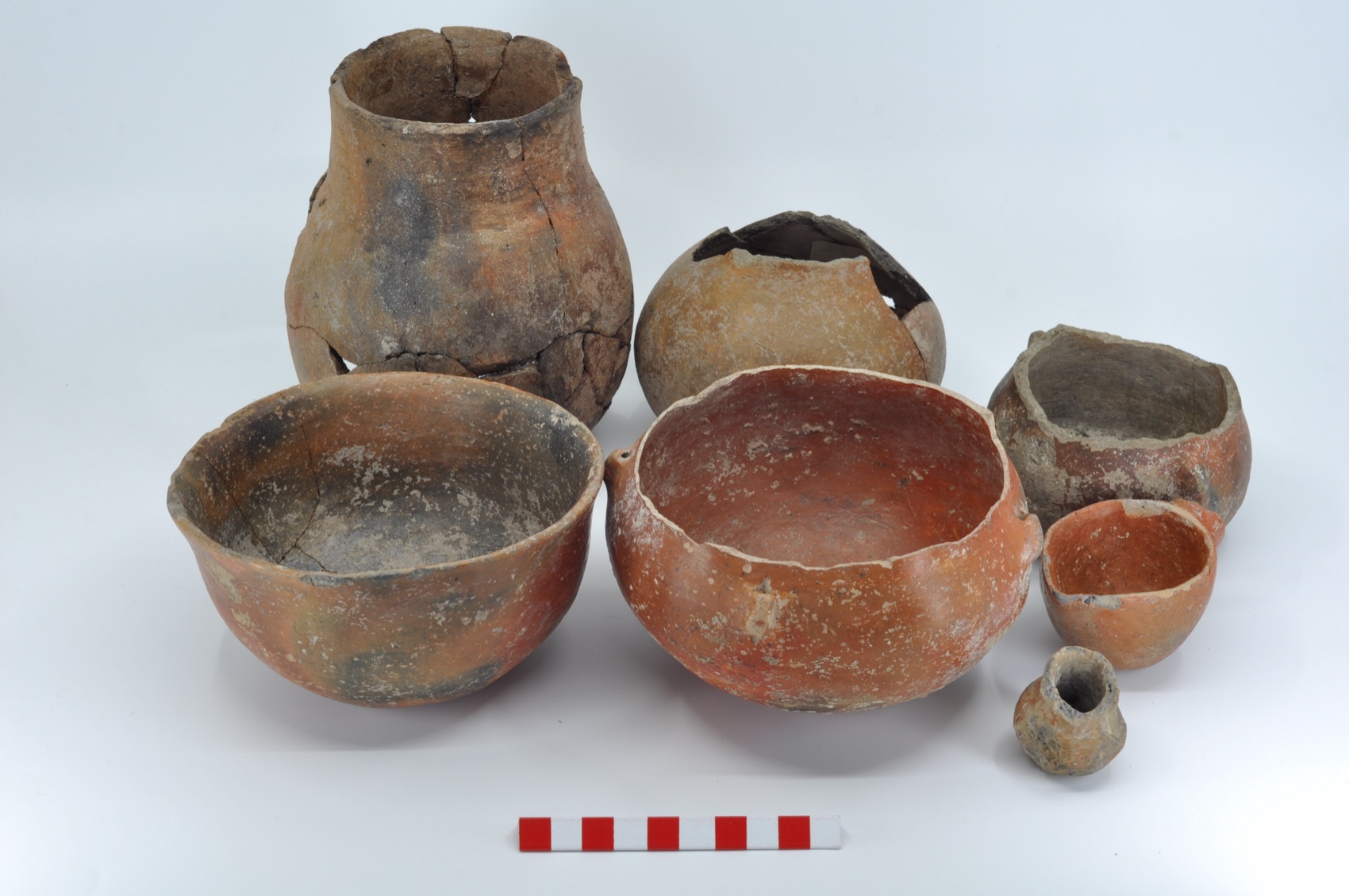
Seven early-period ceramic vessels against a grey background: jars and deep bowls, with a scale in front.
Early-period potteryFired clay
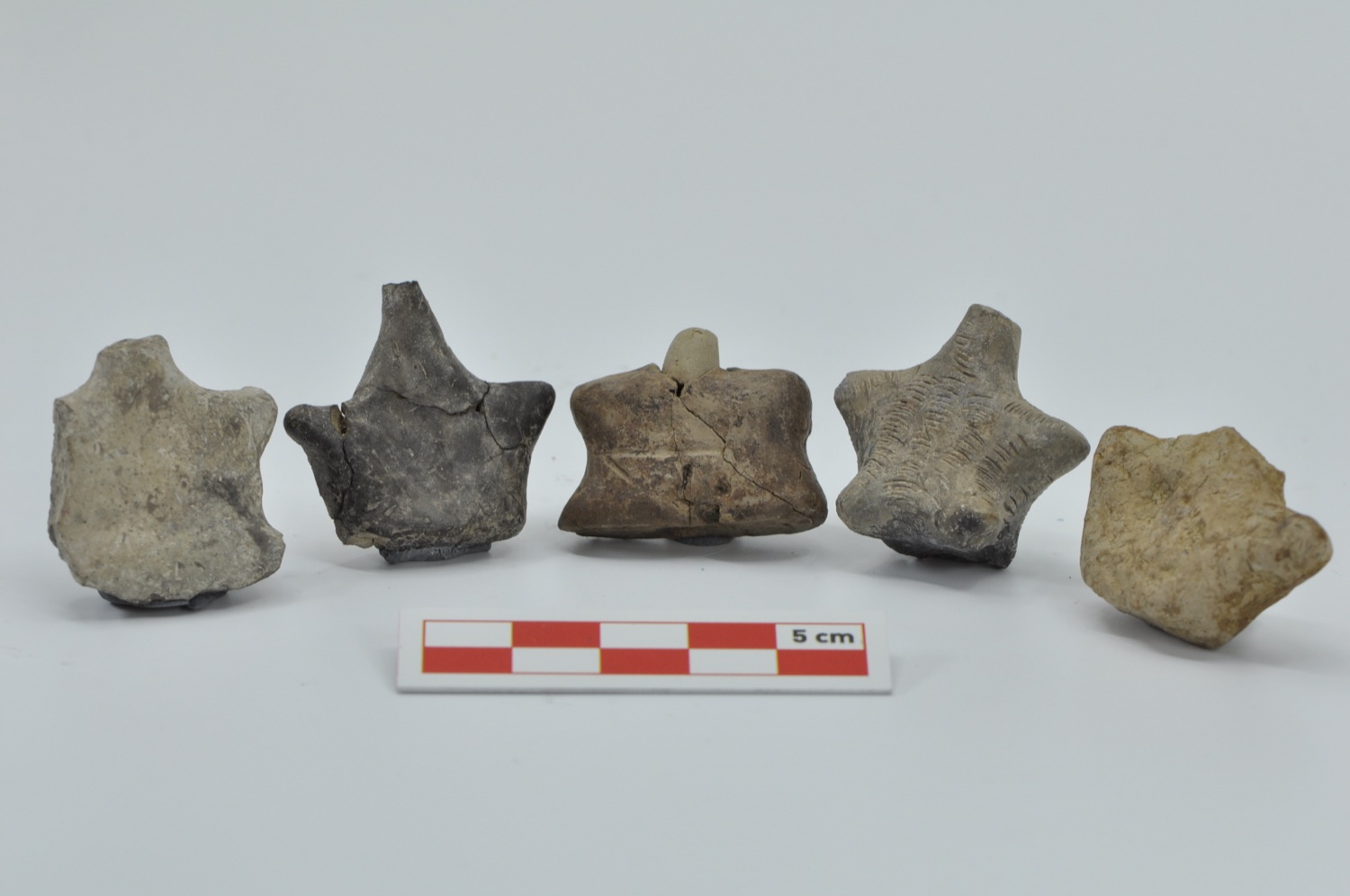
Five small clay objects against a grey background; impressed and incised decoration on their surfaces, with a scale in front.
Decorated clay objectsFired clay
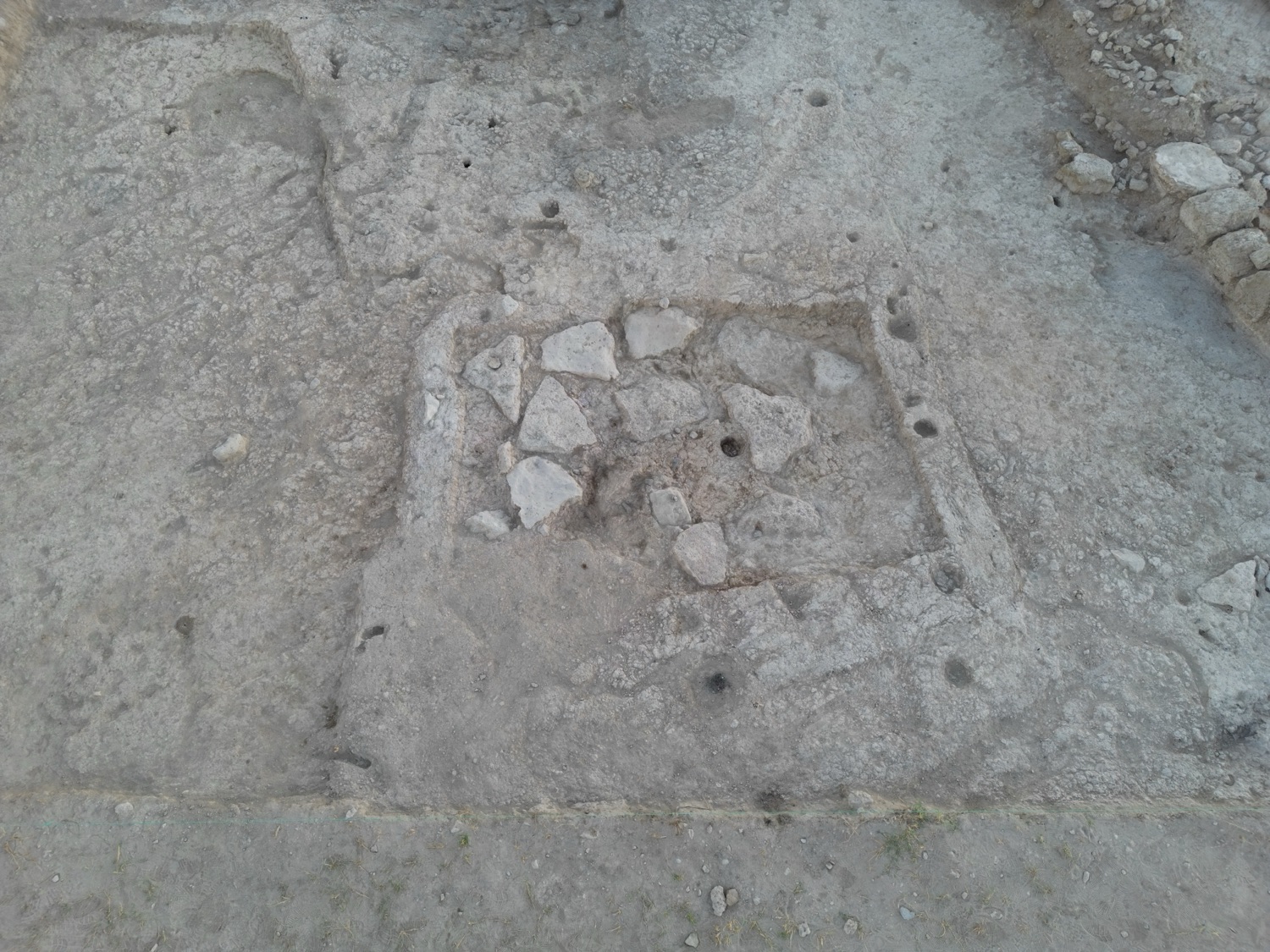
A stone-paved rectangular floor exposed in an excavation trench.
Stone-paved floorIn the field · in situ
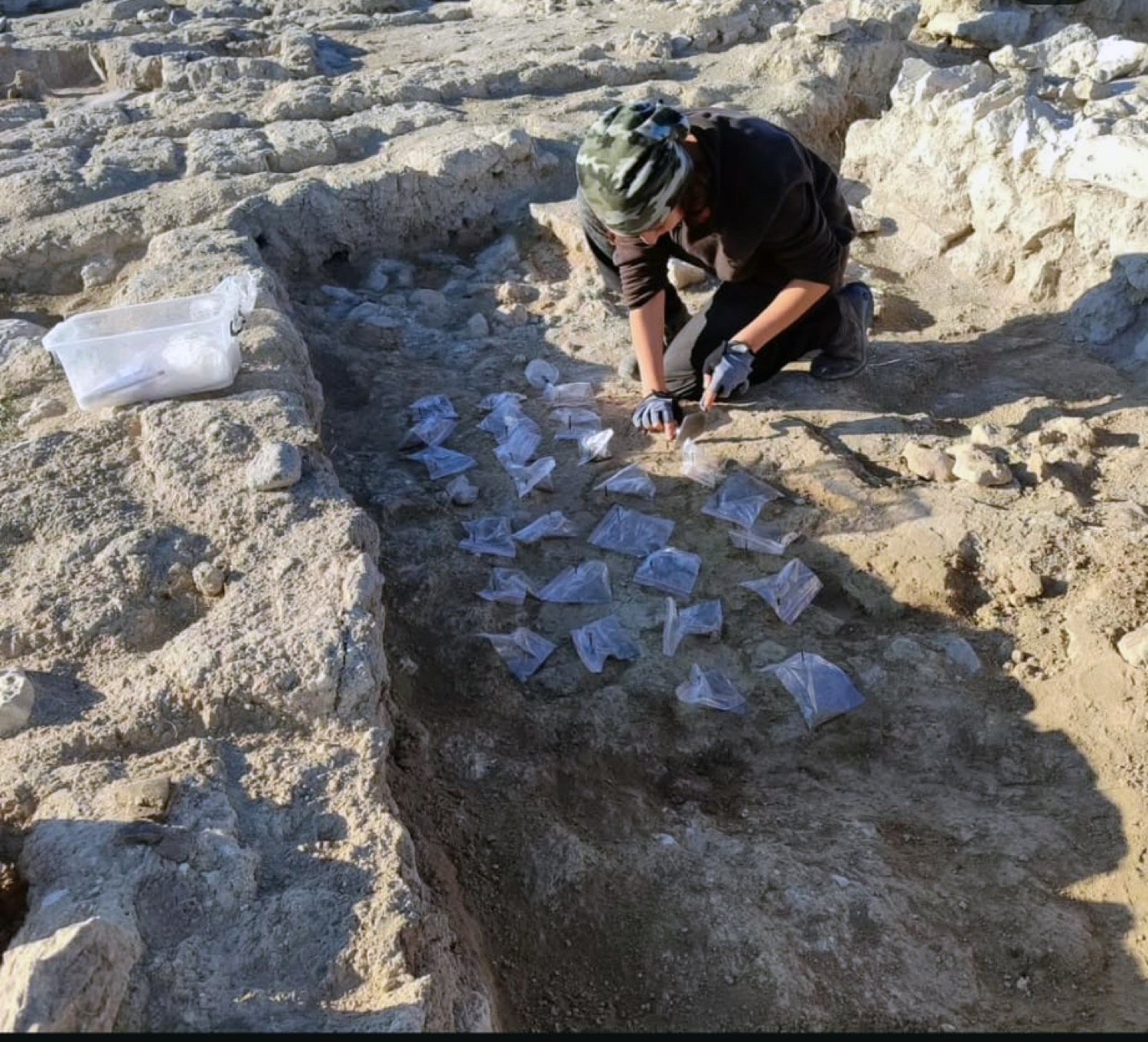
A team member working over labelled bags of finds laid out in a trench.
Finds documented in placeIn the field · in situ
Overhead orthophoto of the excavation area: wall remains within trenches divided into grid squares.
Orthophoto of the excavation areaPhotogrammetry · excavation archive
04

Team

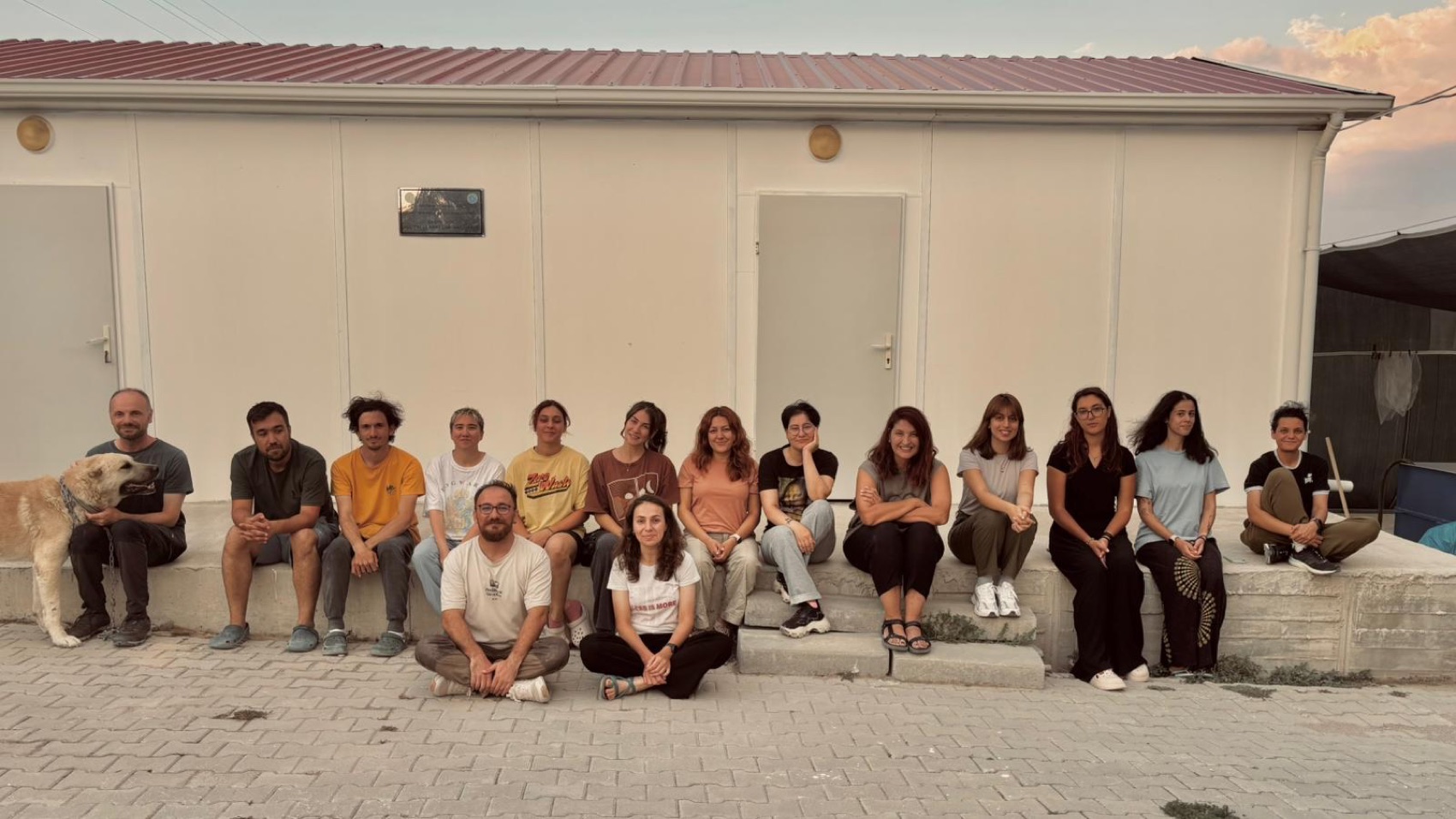
The excavation team sitting on the steps in front of the dig house, smiling; the team dog on the left.
The team at the dig houseSeason memento · excavation archive
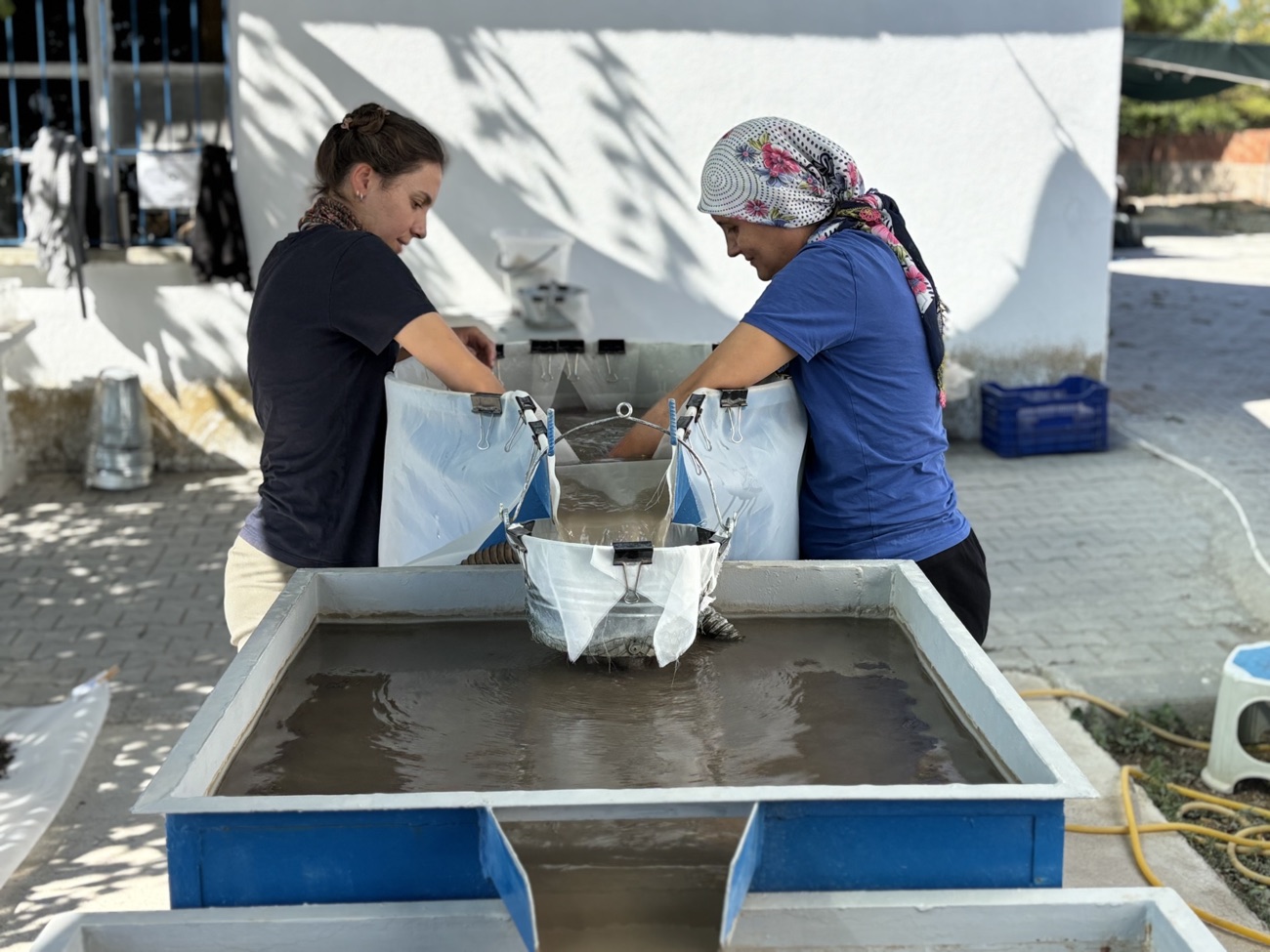
Two team members washing soil samples through a flotation tank.
Flotation: separating seeds from soil
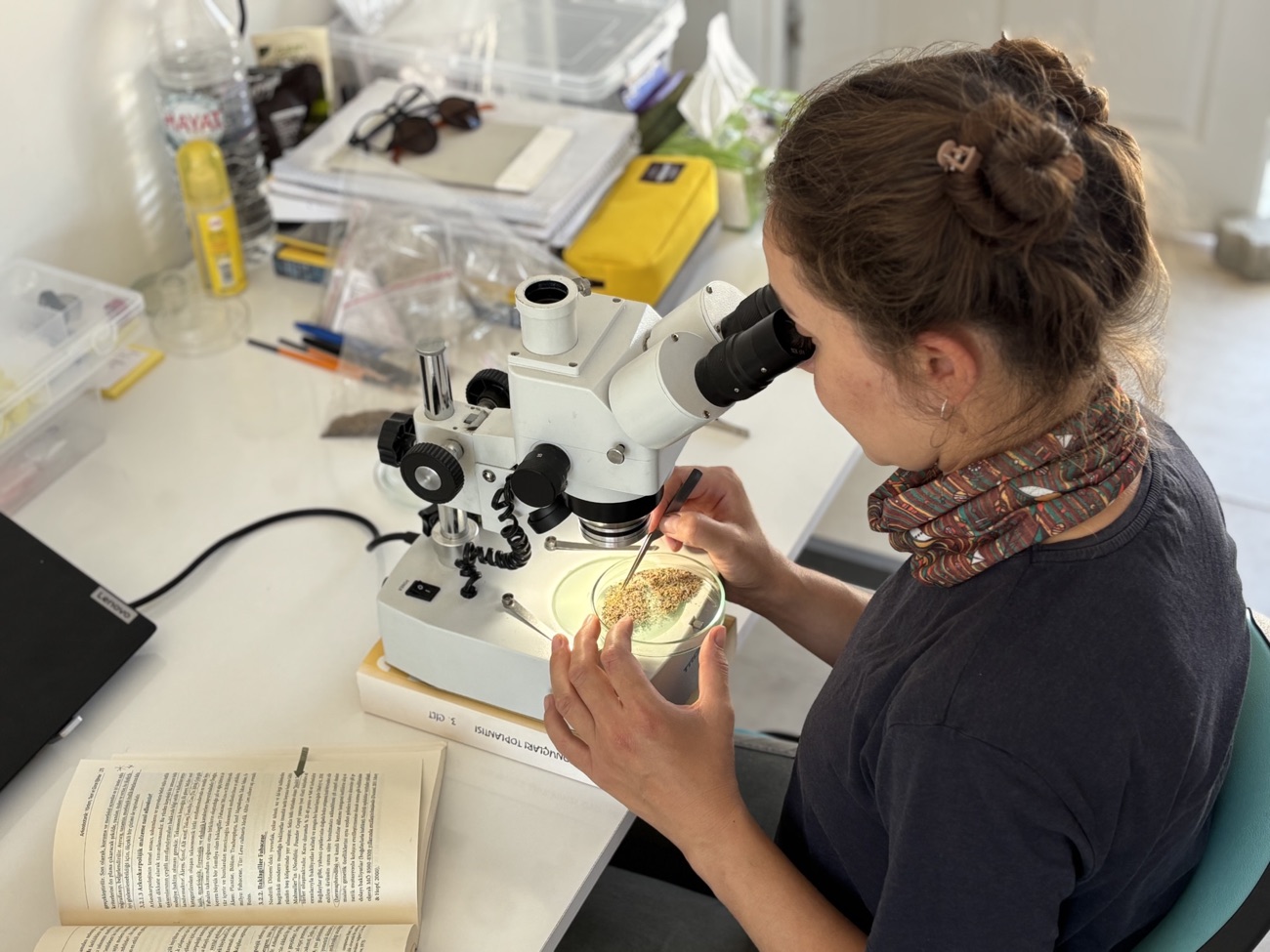
A team member examining an archaeobotanical sample under a microscope.
Examination under the microscope
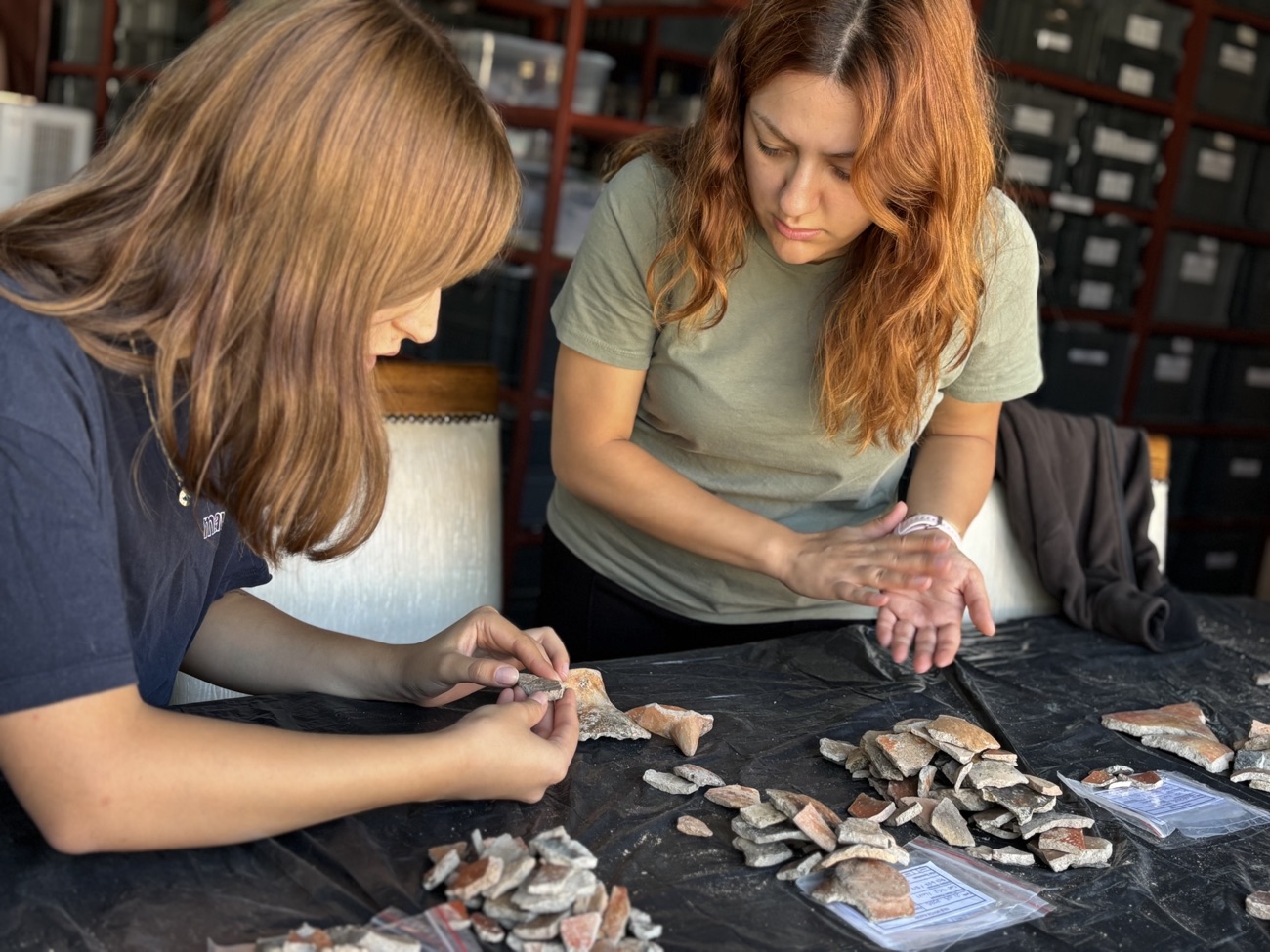
Two team members sorting pottery sherds laid out on a table.
Sorting and recording pottery
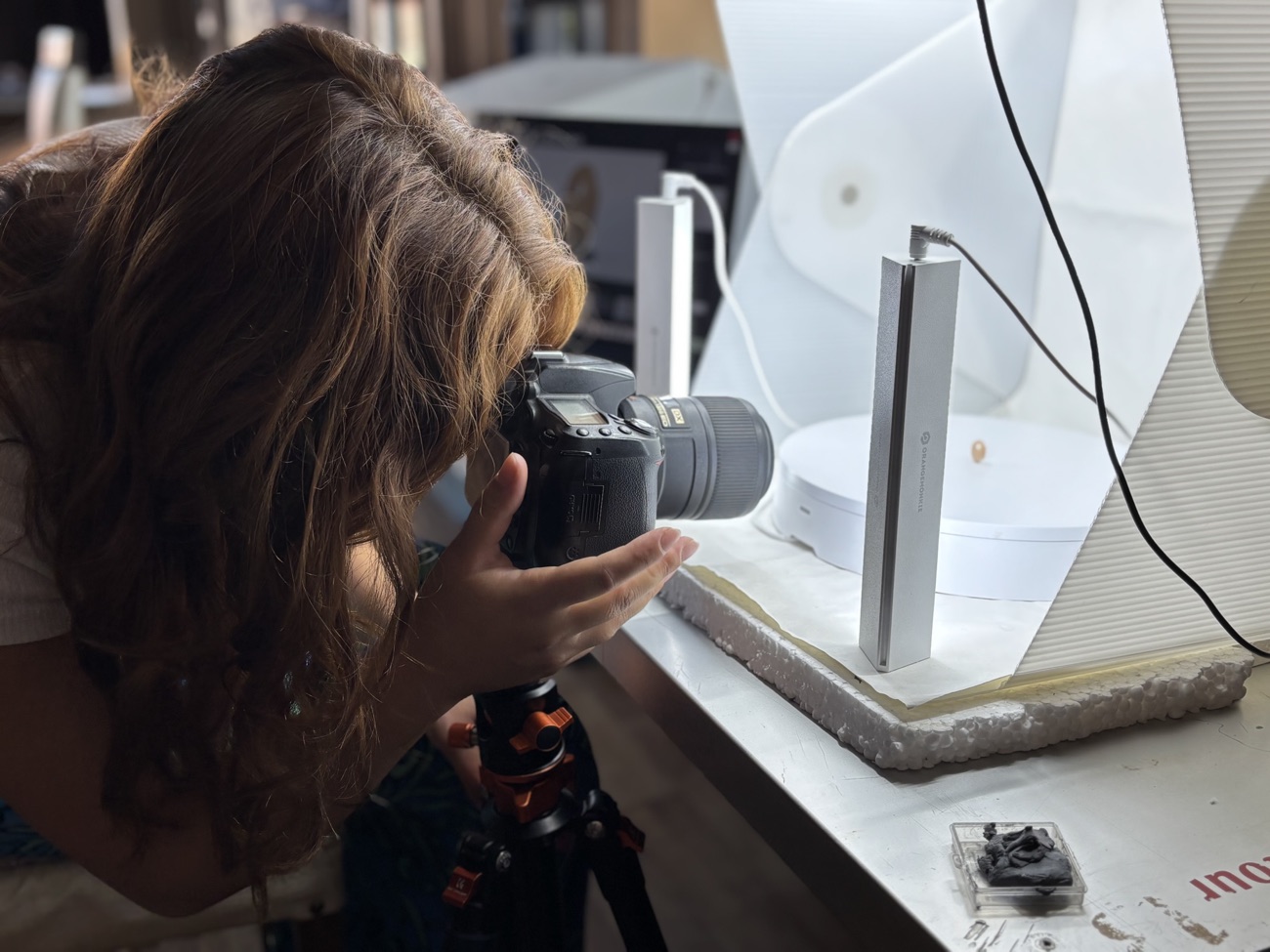
A team member photographing a small find on a tripod inside a light tent.
Photographing the finds

2026 Season · Interdisciplinary research team

Archaeology · Field, Ceramics & Lab

  • Prof. Dr. Fulya Dedeoğlu KonakçıEge University · excavation director
  • Asst. Prof. Bora Temürİzmir Democracy University · deputy director
  • Res. Asst. Doğa YeşilbaşEge University
  • Prof. Erim Konakçıİzmir Democracy University · ceramics
  • Ayşen ÇelebiEge University · field & data recording
  • Nejla Alperfield, lab & recording
  • Merve Altınarchaeologist
  • Senem Aktoğu
  • Yuşa Şahin
  • Deniz Zengin
  • Ada Budak
  • Selin Sude Satır
  • Sude Kiy
  • Okan Can Deniz

Geology, Geoarchaeology & Palaeogeography

  • Assoc. Prof. Barış SemizPamukkale University · geology
  • Assoc. Prof. Korhan ErturaçGebze Technical University · geoarchaeology
  • Dr. Mustafa KibaroğluUniversity of Tübingen
  • Asst. Prof. Aylin KaradaşEge University
  • Asst. Prof. Rifat İlhanAdıyaman University
  • Res. Asst. Hilal Okur ErturaçGebze Technical University
  • İrem SalmanGebze Technical University
  • Başak Akkuşpalaeogeography

Bioarchaeology & Zooarchaeology

  • Prof. Başak BozTrakya University · bioarchaeology (anthropology)
  • Prof. Gülçin İlgezdi BertramAhi Evran University · zooarchaeology

Archaeobotany

  • Prof. Eleni AsoutiUniversity of Liverpool
  • Asst. Prof. Ceren KabukçuUniversity of Liverpool
  • Gülçin UygurEge University

Specialist Analyses & Research

  • Dr. Aysel Arslan Dikerfingerprint analysis on clay finds
  • Prof. Hande Şahinİzmir Democracy University · sociological research
  • Özlem Tuzcu-Pekyolluresearch

Conservation & Restoration

  • Lecturer Fatma ŞenolEge University · restoration & conservation
  • Lecturer Dr. Çağrı TarhanPamukkale University · conservation & restoration
05

Projects

  1. Resource Use and Sustainability Strategies of Western Anatolian Neolithic Communities: The Case of Ekşi Höyük
    TÜBİTAK · 124K905
  2. Interaction and Socio-Cultural and Economic Transformation Created by Archaeological Excavations: The Case of Ekşi Höyük
    TÜBİTAK
06

Publications

  1. Ekşi Höyük: Archaeological Excavations of 2017–2018
    Dedeoğlu, F. et al. · 41st Excavation Results Symposium (KST), Vol. 2 · Ministry of Culture and Tourism, 2020
  2. Ekşi Höyük 2015–2019: First Results and Observations on the Neolithic Period of the Upper Meander Basin
    Dedeoğlu, F. et al. · Arkeoloji Dergisi, XXIV (2019) · Ege University, Faculty of Letters
  3. Ekşi Höyük: 2016 Excavation Works
    Dedeoğlu, F., Baysal, H. H., Ozan, A., Konakçı, E., Temür, B. · 39th Excavation Results Symposium (KST), Vol. 2, 2018
  4. Ekşi Höyük: 2015 Excavation Works
    Dedeoğlu, F. et al. · 38th Excavation Results Symposium (KST), Vol. 2 · Ministry of Culture and Tourism, 2017
07

News & Events

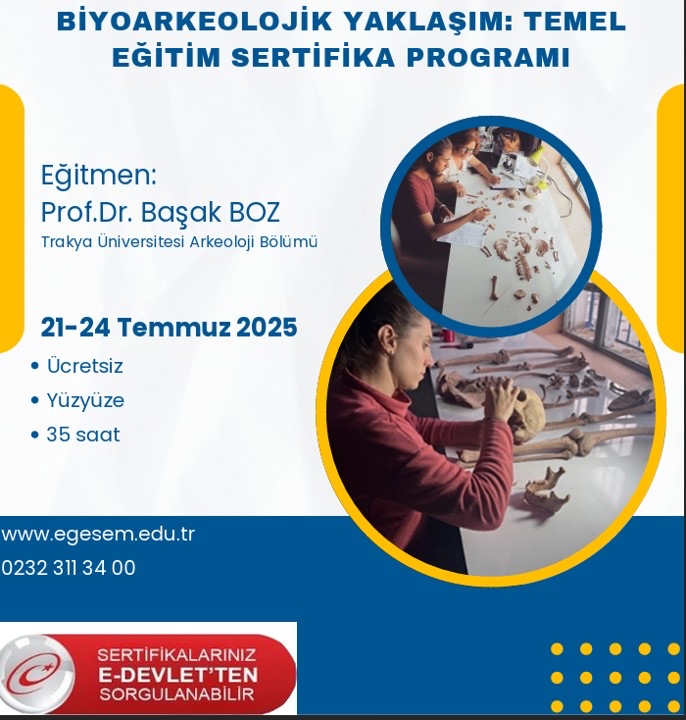
Poster of the Bioarchaeological Approach: Basic Training Certificate Programme; instructor Prof. Dr. Başak Boz, 21–24 July 2025.
Event

Bioarchaeological Approach: Basic Training Certificate Programme

Led by the excavation team's bioarchaeologist Prof. Dr. Başak Boz (Trakya University, Department of Archaeology), this in-person programme focused on the field and laboratory methods for human skeletal remains. The free, 35-hour course was held in cooperation with the Ege University Continuing Education Centre (EGESEM).

2017–2018 excavation report published

The 2017–2018 seasons of Ekşi Höyük appeared among the proceedings of the 41st Excavation Results Symposium.

Neolithic synthesis article released

"First Results and Observations on the Neolithic Period of the Upper Meander Basin" was published in Arkeoloji Dergisi XXIV.

Excavations begin at Ekşi Höyük

Following the surveys, systematic excavation work began at the mound.

08

Contact

AddressEge University, Faculty of Letters, Department of Archaeology
Bornova 35100 · İzmir, Türkiye

Social mediaInstagram

InstitutionalThe Ekşi Höyük excavations are carried out on behalf of Ege University, with the permission of the Turkish Ministry of Culture and Tourism.

Ekşi Höyük excavation logo Ege University logo Republic of Türkiye, Ministry of Culture and Tourism logo